
How to Choose Colors for a Scrap Quilt (Without Overthinking)
Scrap quilts are some of the most joyful quilts to make—but they can also feel intimidating.
Many quilters worry their fabrics won’t work together or that their quilt will look chaotic instead of intentional. But the truth is that scrap quilts don’t require complicated color theory.
They just need a little structure.
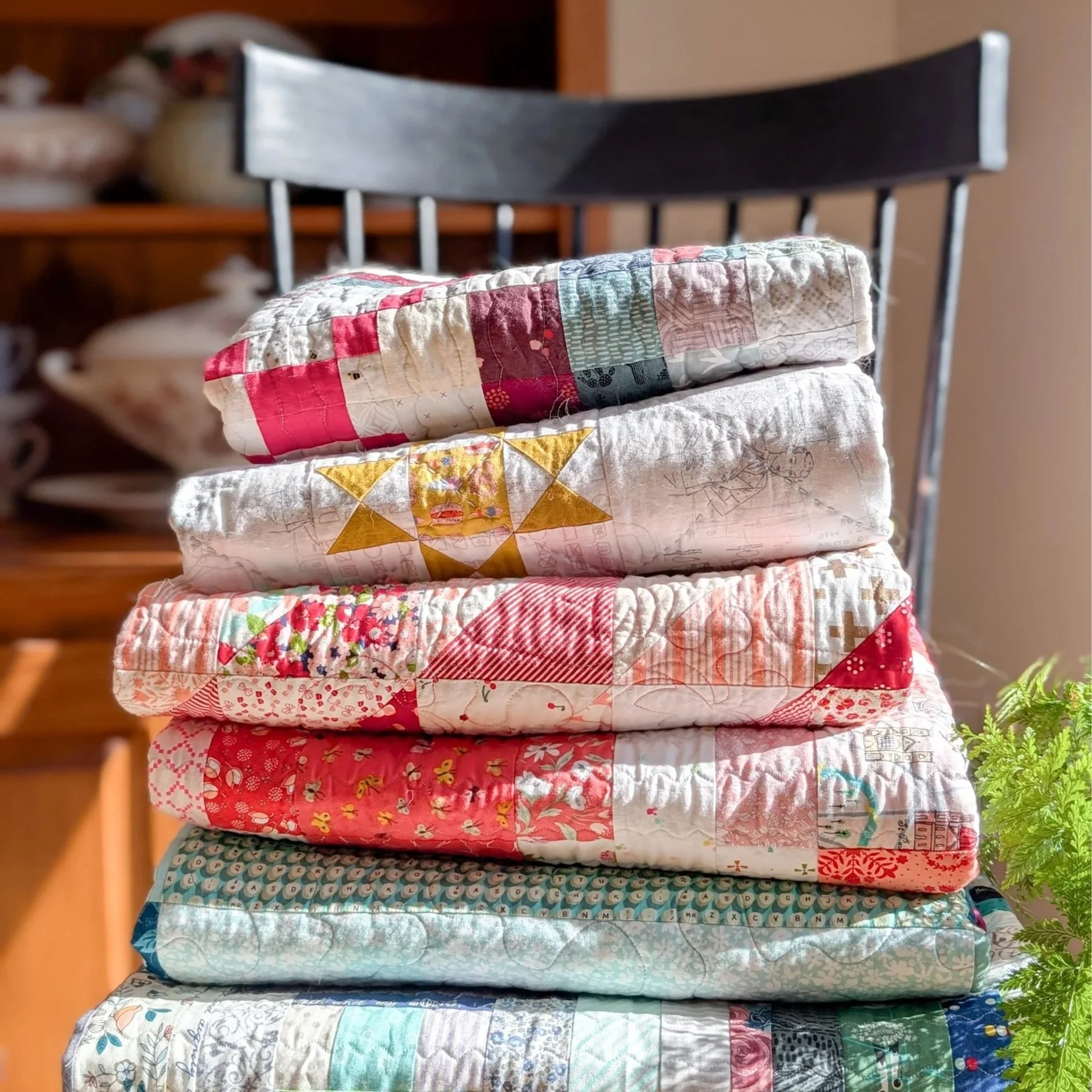
That’s exactly why I developed my Usable Scrap Method—a simple way to turn leftover fabric into scrap sizes that are ready to sew into quilts. When your scraps are already cut into usable sizes, pulling fabrics becomes easy and surprisingly fun.
Let’s look at how to choose colors without overthinking the process.
Start With the Scraps You Already Have
Instead of trying to build a perfect color palette from scratch, begin with the scraps already in your stash. Every quilter’s stash naturally leans toward certain colors. You might notice you have a lot of:
blues and teals
warm corals and pinks
earthy neutrals
low-volume prints
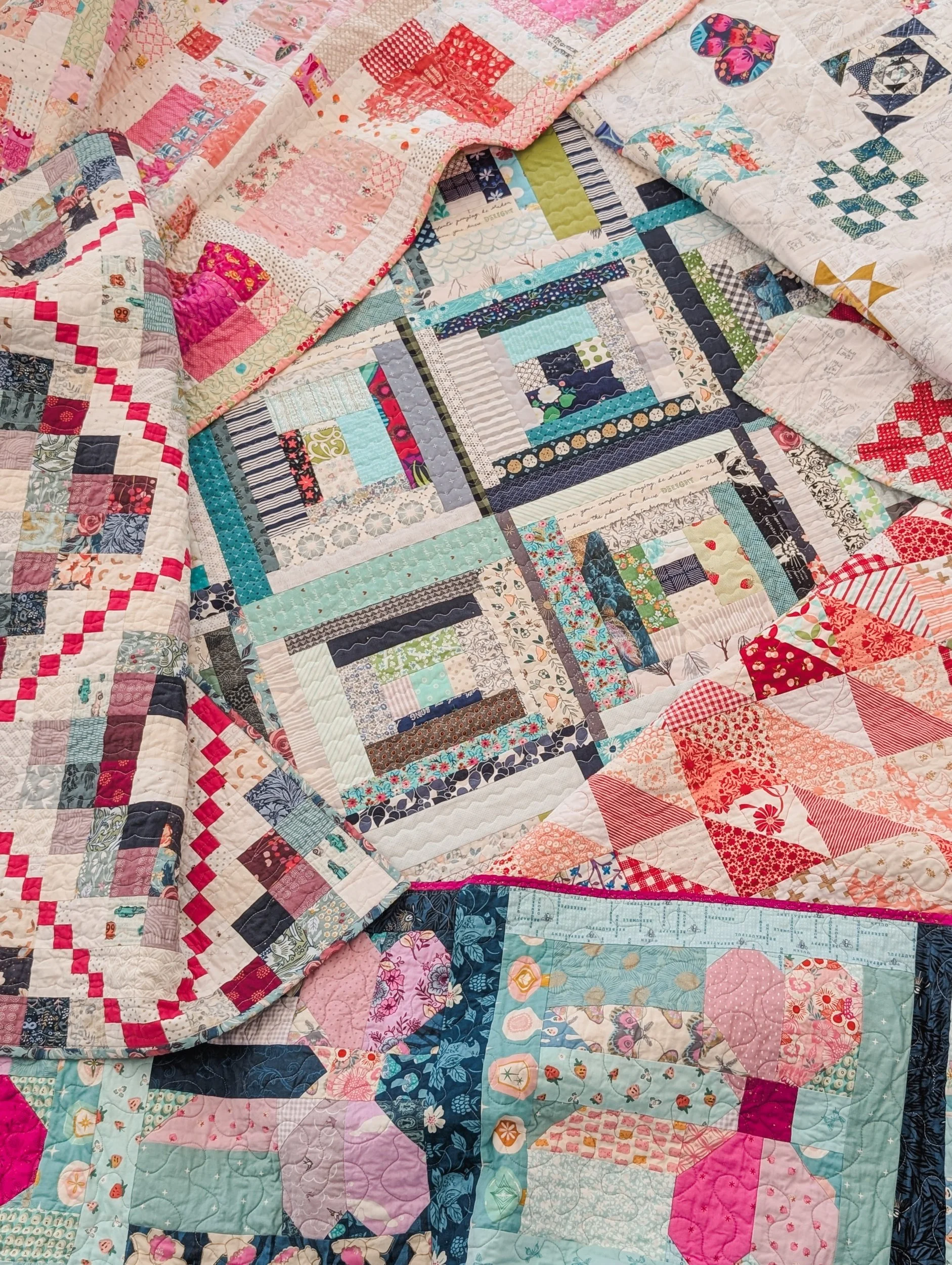
That’s completely normal—and actually helpful. The best scrap quilts don’t fight your stash. They build from it.
When you work within your natural color tendencies, quilts tend to feel cohesive without needing strict rules.
Look for Value Contrast
The most common reason scrap quilts feel flat isn’t the color palette.
It’s the lack of value contrast.

Value refers to how light or dark a fabric appears. If most of your fabrics fall into the same medium range, quilt blocks can lose definition.
A quick trick is to take a photo of your fabric pull and convert it to black and white.
If everything looks similar in gray tones, add:
one lighter fabric
one darker fabric
Even a small amount of contrast can make a scrap quilt feel much more dynamic.
Pro Tip: If nothing else, make sure there is good contrast between the feature fabrics and your background!
Repetition Creates Cohesion
One of the simplest ways to make scrap quilts look intentional is repetition.
When a color appears several times across the quilt top, the eye begins to see it as part of the design rather than a random fabric.
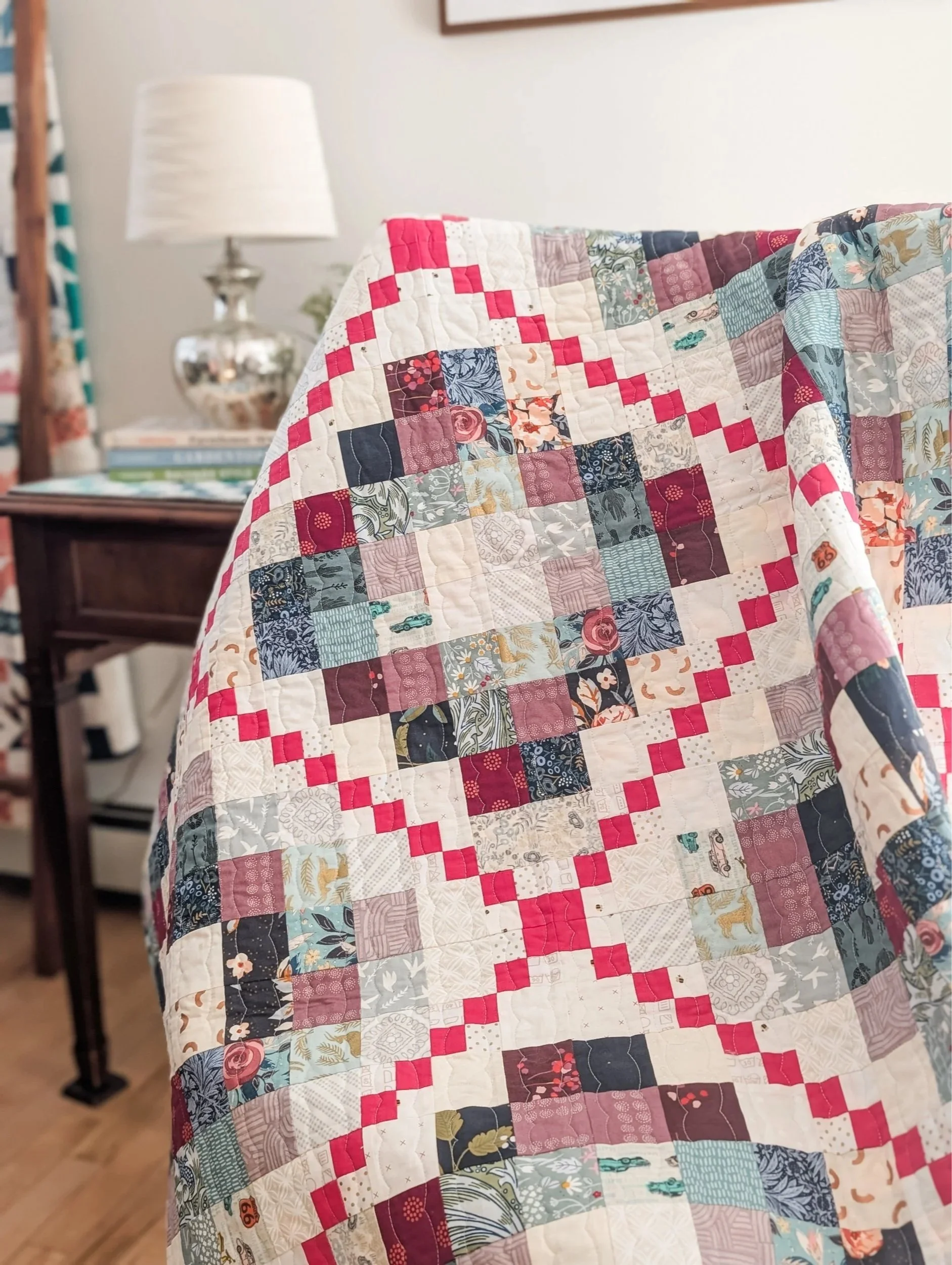
For example, in this Limington Quilt, I introduced a fabric with raspberry pink in it, so I knew I wanted to make that color look more at home. So, I purposefully chose the accent chain to be a coordinating pink. This helps connect different areas of the quilt visually.
This is one of the easiest ways to guide the color story in a scrap quilt.
When Your Scrap Colors Feel Unbalanced
Sometimes your scraps are missing an important color. This is where my FQ Scrap Stash Builder strategy comes in.
Instead of buying yardage or abandoning your scrap palette, simply cut a fat quarter into the same scrap sizes you already use (You can read more about this strategy in my FQ Scrap Stash Builder tutorial).
Scrap Quilts Don’t Need Perfect Planning
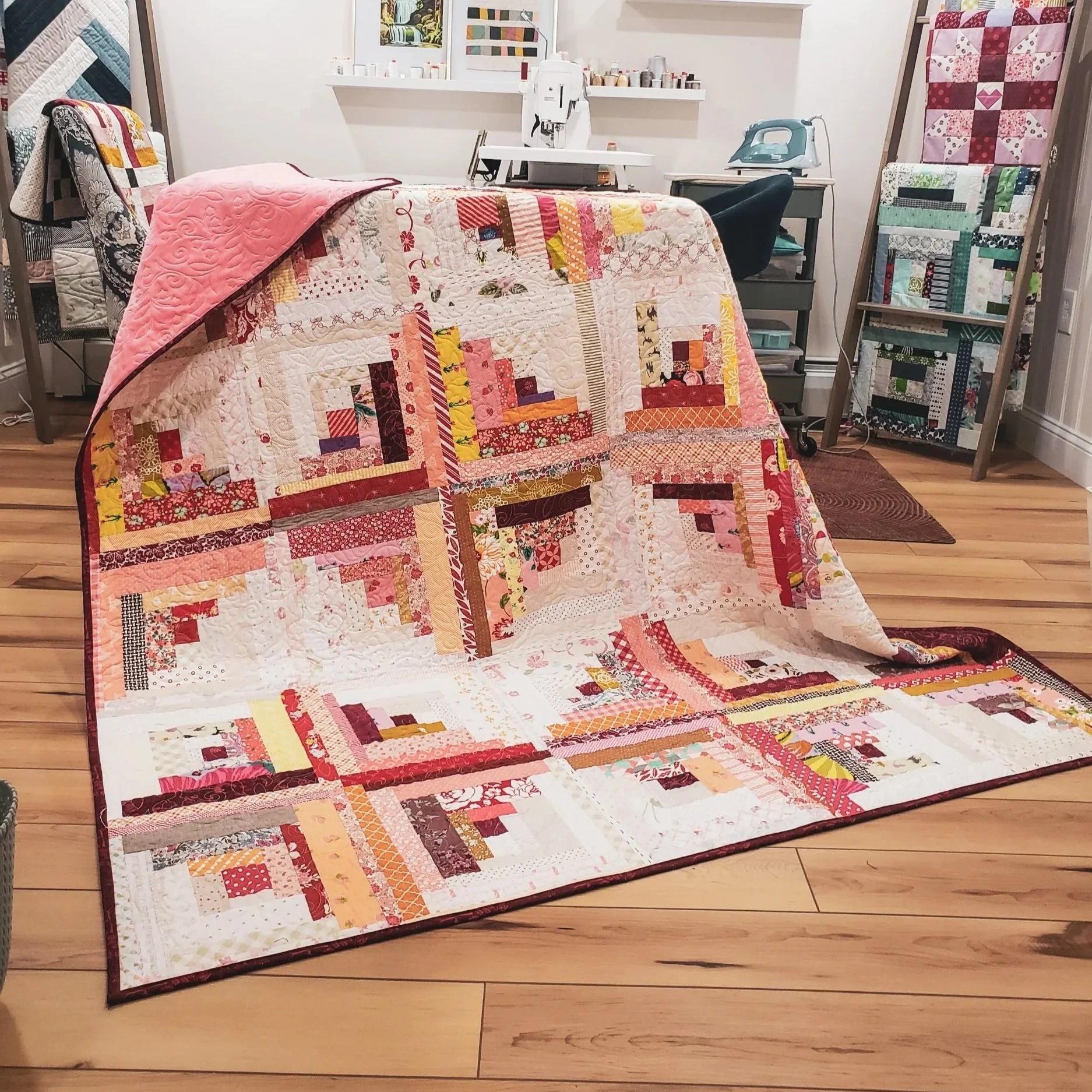
Scrap quilts are meant to celebrate variety.
If you have:
a range of light and dark fabrics
a few repeated colors
scraps cut into usable sizes
you already have everything you need to make a beautiful scrappy quilt.
If you’d like help organizing your scraps so they’re always ready to use, my Usable Scrap Method walks you through the simple sizes I use to turn leftover fabric into future quilts.
Once your scraps are ready to sew, scrap quilts become one of the easiest—and most satisfying—types of quilts to make.
Stay tuned for my next blog post all about taking the overwhelm out of scrap quilts using 3 simple tricks.
Kate
