
Why Your Quilt Blocks Shrink (or grow): The Scant 1/4" Seam Secret
Have you ever spent hours meticulously cutting fabric, only to find that your finished quilt block is somehow 1/8" smaller than it’s supposed to be?
It’s a specialized kind of heartbreak. You check your ruler. You check your rotary cutter. You check the pulse of your sewing machine. Everything seems fine, yet your corners aren’t meeting, and your points are disappearing into the abyss. And your quilt ends up being an inch or two smaller or larger than it should be.
I’ve been there. For a long time, I thought my sewing machine was just being spiteful. But the truth is much simpler: Your 1/4" seam might be lying to you.
The Problem: The Fabric "Fold"
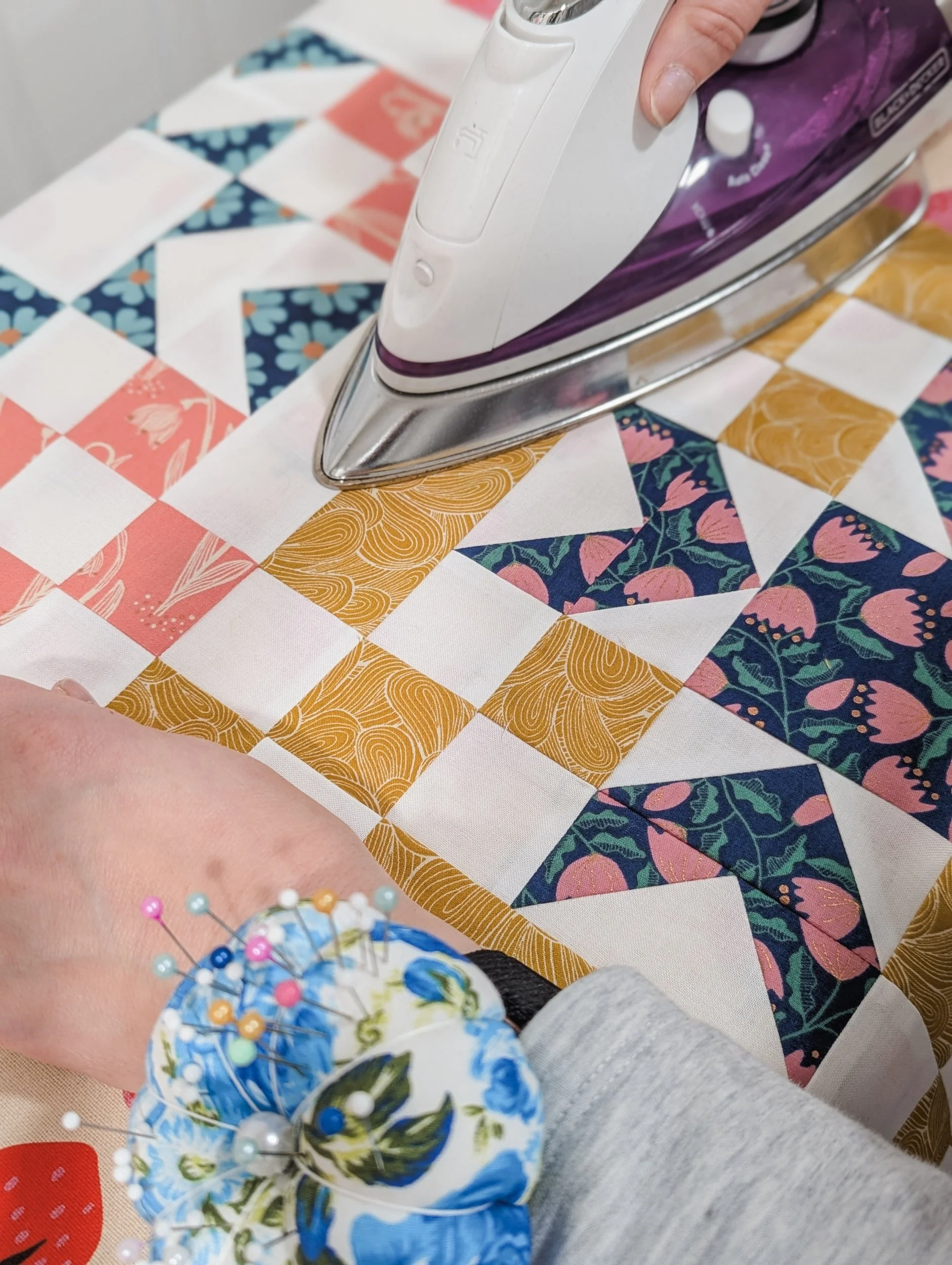
When we sew a standard 1/4" seam, we often forget to account for two things:
The thickness of the thread.
The "turn of the cloth"—that tiny bit of fabric used up when you press your fabric back.
If you sew a "true" 1/4" seam, those two tiny factors steal a sliver of width from every single patch. Multiply that by 10 or 20 seams in a block, and suddenly your quilt is shrinking faster than my motivation to do laundry.
The Fix: The "Scant" Quarter-Inch
The secret to perfect points is the scant quarter-inch. This isn't a suggestion; it’s a lifestyle choice for accurate quilters.
A "scant" seam is exactly one or two thread-widths narrower than a true 1/4". It feels like you’re cheating, but that tiny extra space is what allows the fabric to fold over perfectly without "eating" into your block's dimensions.
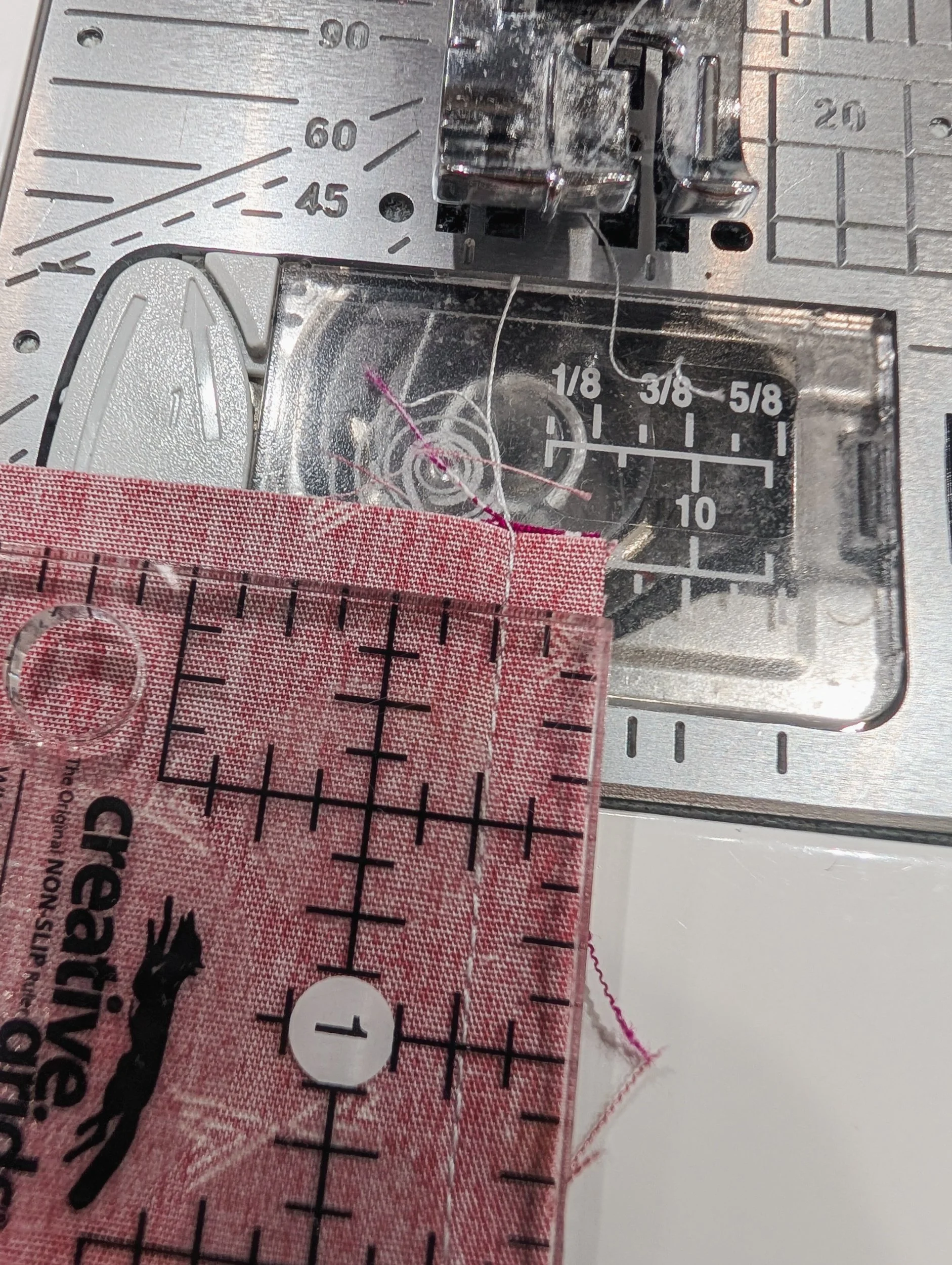
How to Find Your Scant Seam
Don't just wing it! Here is how I calibrate my machine:
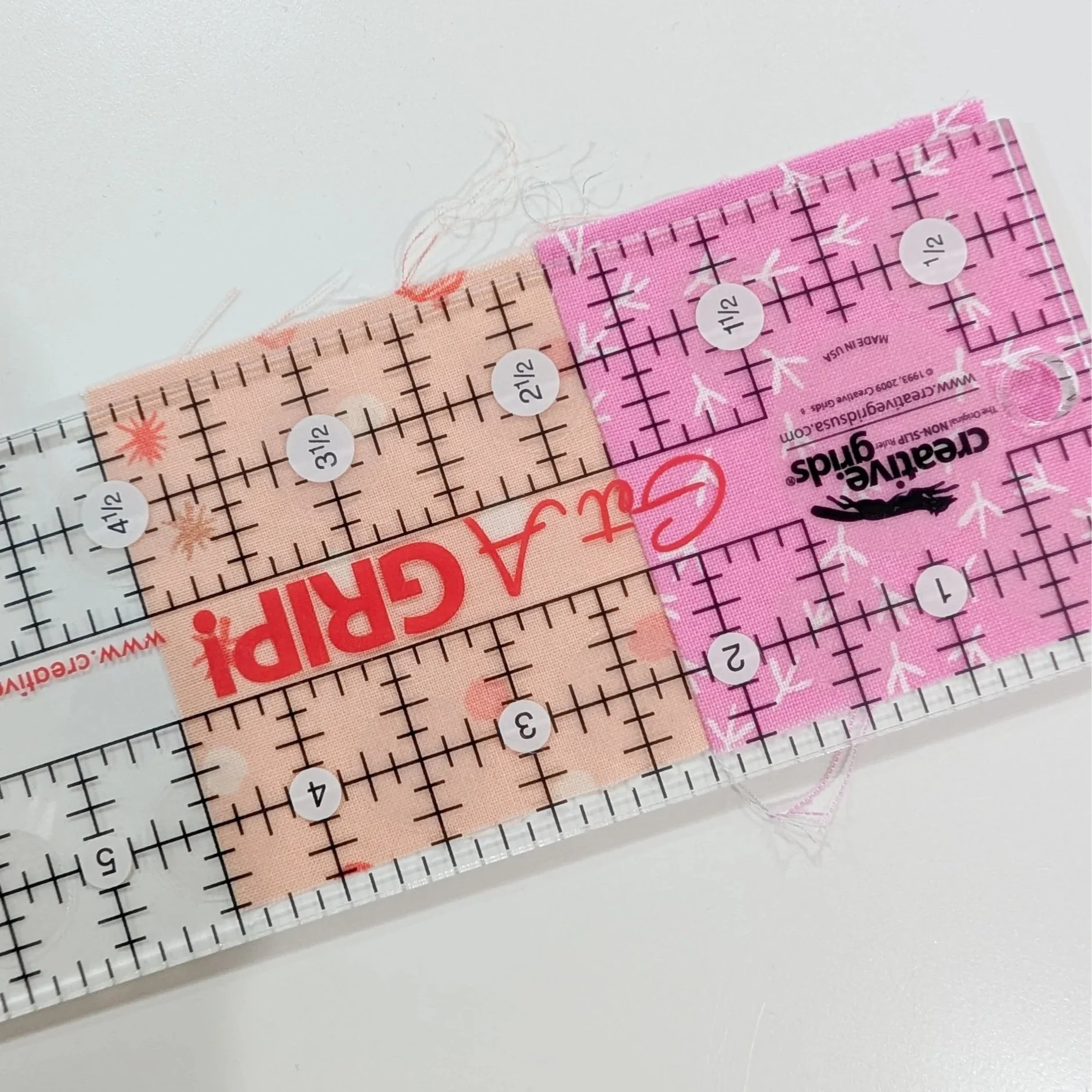
The Test Run: Cut two 2.5" squares. Sew them together with what you think is a scant 1/4".
Measure: Press the seam. The resulting unit should measure exactly 4.5" wide.
The Adjustment: If it's smaller than 4.5", move your needle one position to the right and try again. If it is larger, move your needle one position to the left. Repeat this until it measures 4.5" exactly.
Why Accuracy Matters Right Now
I’m currently obsessing over these "accuracy hacks" because I am finalizing a brand-new pattern launching this April! It involves some points that require precision, and I want to make sure you have the tools to make it look flawless too.
Stay sharp (and scant),
Kate
